 nettobegroup
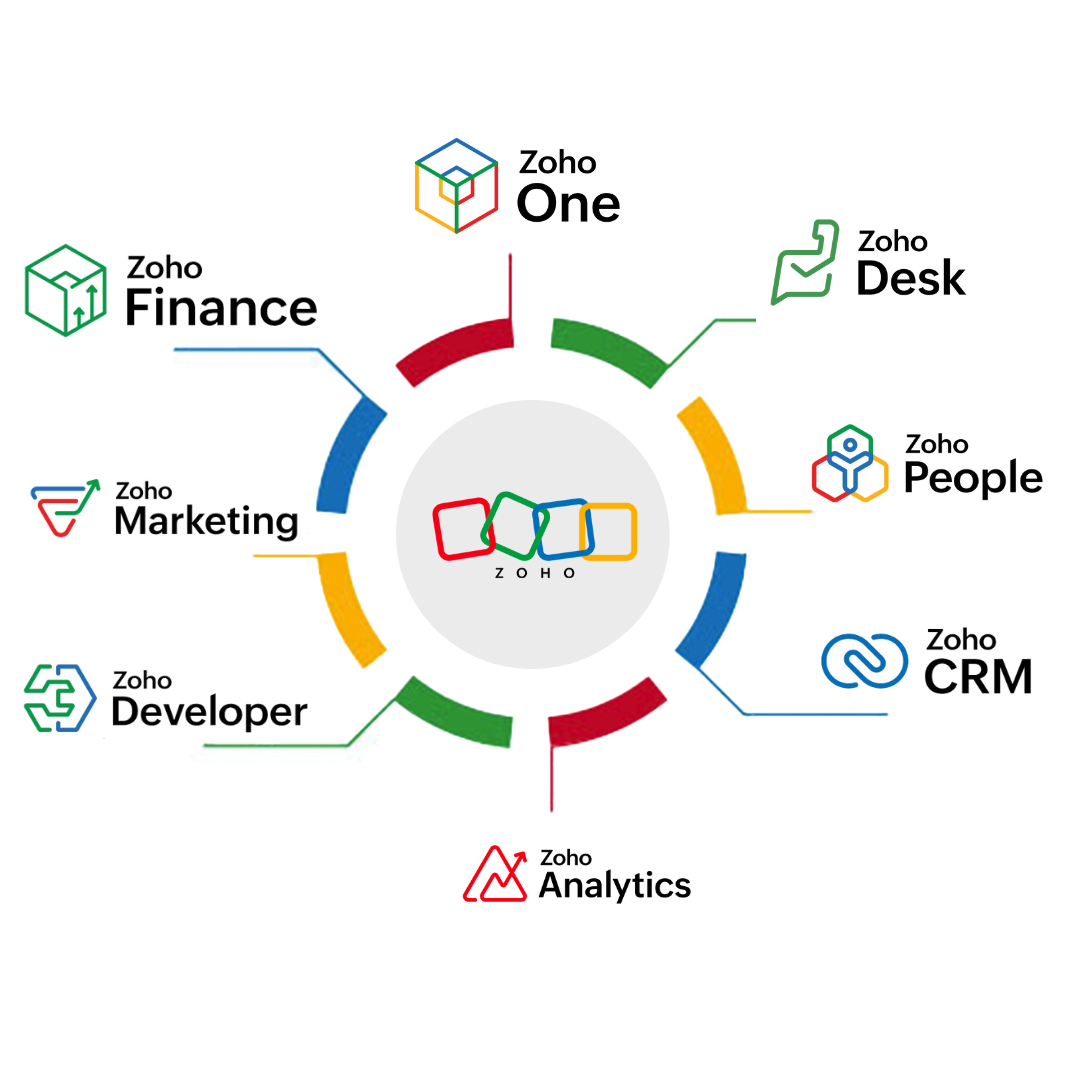
Why Zoho should be implemented as an ecosystem rather than as isolated apps.
When the output of a so-called working system functions today, it can easily be called a success even if the underlying process is a fragile mess of manual workarounds.
These systems are held together by ‘invisible’ threads: tedious spreadsheets and over- or under-engineered automations that no one truly understands. When the logic behind a workaround is lost to time, it ceases to be a system and becomes a liability. It might hold for now, but the moment the organisation tries to scale or pivot, the entire structure risks a disastrous break.
Many organisations implement solutions app-by-app, achieving brief successes but frequently masking underlying process ambiguities which become long-run operational burdens. The main thesis of this essay is clear: Zoho should be implemented as a unified ecosystem rather than as isolated applications to establish sustainable, transparent operational processes that support growth and adaptability.
Why a Working System is different from a Scalable one
A ‘working system’ is defined here as a setup that solves the immediate functional requirements and supports the current team. However, it lacks the capacity to anticipate future changes, unforeseen issues, necessary integrations, rapidly expanding data, or a growing customer base. Consequently, while such a system may function adequately in the short term, it is inherently limited in its ability to support organisational growth and adapt to evolving business demands.
A scalable system is intentionally designed to accommodate changes and future complexities without compromising its structural integrity. Unlike systems that address only current needs, scalable systems proactively incorporate flexibility, modularity, and clear process definitions to remain robust as demands increase. For organisations experiencing growth, scalability requires a significant transformation of their operational infrastructure, including adopting standardised processes and cohesive integration strategies that facilitate sustainable expansion while maintaining consistency.
These are the most common implementation mistakes that cause operations to slow down or working systems to fail include:
- Implementing each app in isolation rather than designing shared foundations
- Automating tasks before the underlying process is clearly defined.
- Allowing spreadsheets and manual exports to become permanent integration layers.
- Creating workflows that no one fully owns or understands
- Making production changes without testing, structure, or rollback paths.
As stand-alone, these might result in minor compromises, but when combined, they can slow operations and task/project execution.
Why Process comes before Automation
Leaders, at times, look for solutions or tools that can solve an immediate problem or loophole in operations or even speed up how things are done to allow ease of work, but ignore the fact that if the process is unclear, and no accountability is done, it only brings more confusion and the automation scales waste.
Answering the necessary questions that bring clarity and accountability defines the process as it is, and automation can then be used as a tool to keep the process consistent, structured, and improvable over time (scalable).
Why Zoho must be treated as an ecosystem
An ecosystem presents a consistent data model, with each tool or application presenting its own records.
Zoho must be treated as an ecosystem, not as siloed apps, because it can build bridges that effectively address data discrepancies across different applications. A siloed approach falls short when third-party apps are used to intersect the data across applications and when there is an increase in the volume of data and customers.
One point solutions, such as lead sourcing to marketing campaigns to sales follow-ups to estimates and invoicing of service to support feedback into the product, are relationships where one cannot happen without the other, so there is a need to bridge an intersection between them, which creates an ecosystem that acknowledges different teams managing these processes.
A practical case study
“Company X” , an outdoor advertising business operating across all districts of Mauritius, is a good example of how operational complexity accumulates quietly.
Like many growing companies, they have adopted tools sensibly over time. Google Sheets to track deals, Google Docs for contract drafts and proposals, and Google Drive folders for safekeeping and documenting project items, particularly for a client. Individually, each tool worked. Collectively, they created fragmentation.
The main challenge did not fall on human capabilities or efforts; it was the limitation of a shared operational system. The breakthrough came not from adding more tools, but from designing the ecosystem: structuring how information moved across the business.
Governance with Process Designs
Governance provides structure to an organisation’s operations and processes. There is significant leverage in who does what with customer data, how changes are introduced, and future handoffs; all this can happen while the process remains the same, without breaking operations. Much clarity is needed to govern a process design.
Long-Term Sustainability of Systems
Long-term sustainability should be the ideal goal of organisations that want to scale out successfully. This will require a lot of practice, documentation, governance, and not just mere configuration and app stacks. The long-term sustainability of a system should be able to predict and inform the organisation about what the future will look like, and to adapt immediately to changes.
Closing Note – The Nettobe Group Approach
Nettobe Group does not just implement Zoho; we help customers design operational solutions and systems through comprehensive business analysis. In practice,
That means starting with facts, not feature lists: the probability and likelihood of a decision failing, mapping decision points, clarifying ownership, and identifying the few rules that actually determine outcomes.
Our approach is practical and credentials-backed by a team that includes practitioners certified in Business Analysis by IIBA and aligned business analysis techniques. We thereby measure success by changes in the system’s reliability, not by how frequently the app(s) or ecosystem are used. For example, structured information will be passed forward from sales to delivery, leaving fewer surprises for the customer or client.
These are the outcomes that matter because they translate directly into predictable growth and lower risk. That discipline is how organisations transform tooling into leverage, and how Nettobe Group helps them do it.